shzna je napisao/la:Ko su i šta su zapravo navijači St.Paulija? Ako neko zna da mi ispriča nešto ukratko o njima, desničari ili ljevičari, najveći rivali, najveće podgrupe itd?
Nije da su lijevicari, ali su protiv fasizma, protiv rasizma, protiv seksizma, protiv homofobije, itd. I protiv modernog fudbala.
Klub je prihvatio stav navijaca i u svoju poslovnu ideologiju je uveo "alternativne" ideje i tako je postao pravi "underground" club.
Pratim St Pauli odkako znam za sebe, posto imaju slicne vrijednosti i slicnu ideologiju kao ja.
Napisat cu ti nesto duze kad se vratim sa posla. Do tada mozes procitati na wikipediji (na engleskom):
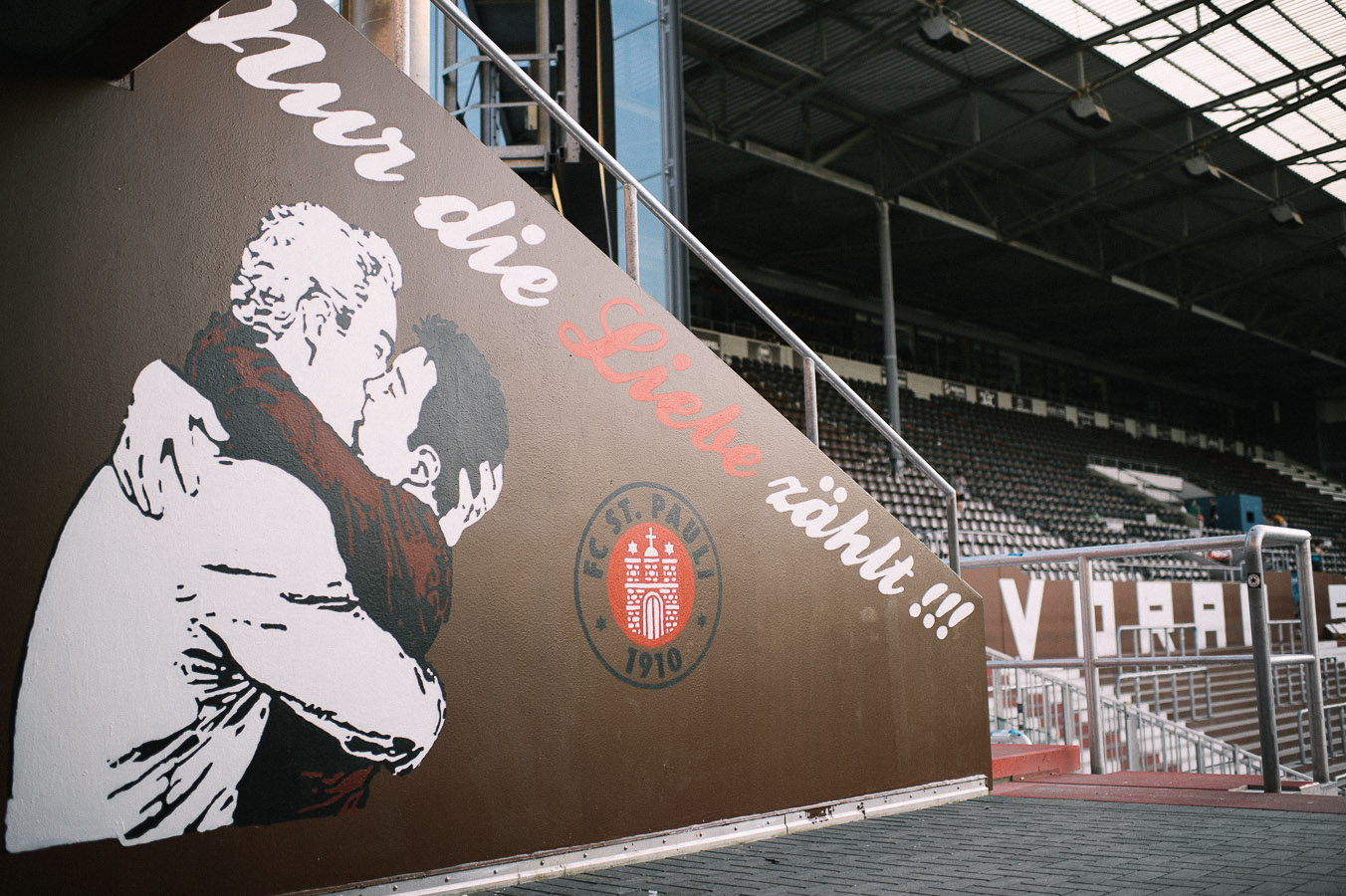
St. Pauli enjoys a certain fame for the left-leaning character of its supporters: most of the team's fans regard themselves as anti-racist, anti-fascist, anti-homophobic and anti-sexist, and this has on occasion brought them into conflict with neo-Nazis and hooligans at away games. The organisation has adopted an outspoken stance against racism, fascism, sexism, and homophobia and has embodied this position in its constitution. Team supporters traditionally participate in demonstrations in the Hamburg district of St. Pauli, including those over squatting or low-income housing, such as the Hafenstraße and Bambule. The centre of fan activity is the Fanladen St. Pauli. St Pauli fans currently have a strong relationship with Ternana fans, Hapoel Tel Aviv fans and Bohemians 1905 fans. Ultrá Sankt Pauli also has a friendship with the ultras scene of Bayern Munich, the Schickeria München.[7] At times the banner of Schickeria München is displayed at the Millerntor Stadion.
The club prides itself on having the largest number of female fans in all of German football.[8] In 2002, advertisements for the men's magazine Maxim were removed from the team's stadium, in response to fans' protests over the adverts' allegedly sexist depictions of women.
The logo of the St Pauli supporter seen on a truck at the stadium.When the team plays in Germany's second football division, their home fixtures at the Millerntor use to average greater attendances than any other team and often exceeded turnouts for second division teams. As of the 2011–12 season, St. Pauli is the only team that has close to one hundred percent in average home attendance.
St. Pauli have more holders of season tickets than many Bundesliga teams[citation needed]. One study recently estimated that the team has roughly 11 million fans throughout Germany,[13] making the club one of the most widely recognised German sides. The number of official fan clubs passed 500 in year 2011 which is an increase of 300 over just three years.[14]
I zvanicne "vrijednosti" kluba:
The first five Principles states that:
– "In its totality, consisting of members, staff, fans and honorary officers, St. Pauli FC is a part of the society by which it is surrounded and so is affected both directly and indirectly by social changes in the political, cultural and social spheres."
– "St. Pauli FC is conscious of the social responsibility this implies, and represents the interests of its members, staff, fans and honorary officers in matters not just restricted to the sphere of sport."
– "St. Pauli FC is the club of a particular city district, and it is to this that it owes its identity. This gives it a social and political responsibility in relation to the district and the people who live there."
– "St. Pauli FC aims to put across a certain feeling for life and symbolises sporting authenticity. This makes it possible for people to identify with the club independently of any sporting successes it may achieve. Essential features of the club that encourage this sense of identification are to be honoured, promoted and preserved."
– "Tolerance and respect in mutual human relations are important pillars of the St. Pauli philosophy."





 Bas mi ih je zao,da su im barem po glavama skakali...